Discover your new possibilities

  • Blepharoplasty
  • Breast Augmentation
  • Revision Rhinoplasty
  • Lower blepharoplasty
  • FUE Hair Transplant
  • Lifting laser
  • 1-Day Veneers
  • Nose thread
  • Blepharoplasty
  • Breast Augmentation
  • Revision Rhinoplasty
  • Lower blepharoplasty
  • FUE Hair Transplant
  • Lifting laser
  • 1-Day Veneers
  • Nose thread
  • Endoscopic facelift
  • Monthly promotion procedure

Discover your new possibilities

  • Blepharoplasty
  • Breast Augmentation
  • Revision Rhinoplasty
  • Lower blepharoplasty
  • FUE Hair Transplant
  • Lifting laser
  • 1-Day Veneers
  • Nose thread
  • Blepharoplasty
  • Breast Augmentation
  • Revision Rhinoplasty
  • Lower blepharoplasty
  • FUE Hair Transplant
  • Lifting laser
  • 1-Day Veneers
  • Nose thread
  • Endoscopic facelift
  • Monthly promotion procedure
Breasts
Surgery Guides

Related
Clinics
Procedure
Time
Recovery
Period
Cost
Range
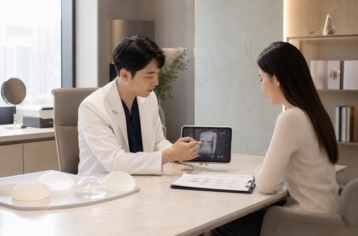
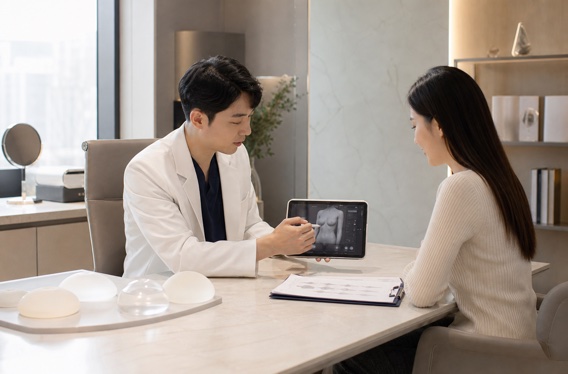
Breast augmentation consultation in Korea

Breast Augmentation in Korea

Index

What Is Breast Augmentation?

Breast augmentation planning map
Breast augmentation is one of the most requested cosmetic surgeries among international patients visiting Korea. Some patients want more volume, some want better symmetry, and some want to restore fullness after pregnancy, breastfeeding, weight change, or aging.
Breast augmentation is a surgery that increases breast volume and improves breast shape. It is most commonly done with silicone gel implants. In some cases, it may also be combined with fat grafting, where fat is taken from another area of the body and used to soften or enhance certain parts of the breast shape.
Implant breast augmentation is usually best for patients who want a clear size increase. Fat grafting alone may create only a modest change and usually requires enough donor fat, so it is not suitable for everyone.
Breast augmentation is different from a breast lift or breast reduction. A breast lift raises sagging breasts and reshapes the tissue, but does not always add volume. A breast reduction removes tissue and skin to make the breasts smaller and lighter. Some patients need a breast lift and implants together if they want both a higher breast position and more fullness.

Who Is a Good Candidate?

A good candidate for breast augmentation surgery is someone who wants to improve breast volume, shape, symmetry, or body balance, and understands both the benefits and limits of surgery.
Common reasons include naturally small breasts, noticeable asymmetry, volume loss after pregnancy or weight change, or wanting the upper body to look more proportionate with the rest of the body.
During consultation, the clinic should not only ask what cup size the patient wants. For a more accurate plan, the surgeon should check chest frame, breast size and proportions, skin and tissue condition, degree of asymmetry, and whether sagging is present. Some clinics also use ultrasound, implant sizing, and simulation to understand the internal tissue condition and help plan the surgery. Patients should be in generally good health and able to take time for recovery. Smoking, certain medical conditions, active infection, bleeding disorders, pregnancy, breastfeeding, or unrealistic expectations may make surgery unsuitable or higher risk.
The consultation matters because implants alone are not always the right answer. If the breasts are sagging, implants may not correct the position and can sometimes make sagging look more obvious. In that case, the surgeon may recommend a breast lift with or without implants.

Breast Implant Types and Brands

Most breast augmentation surgeries in Korea use silicone gel implants because they can feel soft and create a natural shape when selected and placed correctly. Patients may hear several implant names during consultation, including Motiva, Mentor, Sebbin, and other approved options depending on the clinic. The exact options can vary by clinic, surgeon, country approval status, and stock availability. Motiva implants may include different shape and projection options, such as Mini, Demi, Full, and Corsé or CORSE. Patients may also hear the names Ergonomix 1 and Ergonomix 2. At the moment, Ergonomix 2 has not yet been approved in Korea, so Korean clinics currently use Ergonomix 1. If a clinic recommends Motiva, ask which exact Motiva line is available and which model the clinic uses. In general, patients may hear Corsé discussed when they want a fuller or higher projection look, but the right choice depends on chest width, tissue thickness, and desired style.
Some Motiva implants may also come with a Qid or Q Inside Safety Technology chip. This is a small biocompatible microchip that helps verify implant information such as size, model, and serial number. It does not make the surgery safer by itself, and it does not replace the need for a skilled surgeon. Some clinics may not strongly recommend the chip version for every patient because of price difference, stock limits, or size availability. Patients should ask whether the clinic offers Motiva with chip, without chip, and which sizes are actually available.
Mentor options may include Mentor Smooth, Mentor Boost, and Mentor Xtra or Extra, depending on how the clinic names the product line. For example, Mentor Smooth may be chosen by patients who want a classic soft feel, while Mentor Xtra or Extra may be described as having more fill or a slightly firmer gel compared with standard smooth options.
The implant brand is important, but it is not the only thing that matters. The implant must also fit the patient's chest width, tissue thickness, skin elasticity, desired look, and long-term safety plan.
Before surgery, ask about implant texture, gel type, shape, warranty, rupture policy, and whether the clinic provides an implant card. The implant card should record the brand, model, size, lot number, and manufacturer details. This can be important for future checkups or revision surgery.

Choosing Implant Size, Shape, and Profile

Implant size, shape, and profile diagram
Many patients first think in cc size, such as 250 cc, 300 cc, or 350 cc. Cc size matters, but it does not decide the result on its own. The same implant size can look natural on one body, too small on another, and too large on a narrow chest.
Surgeons usually consider chest width, shoulder width, breast base width, rib cage shape, existing breast tissue, skin elasticity, and overall body proportions. The goal is to choose an implant that fits the patient's anatomy instead of forcing the body to match a trend.
Shape and profile also change the result. Round implants can create more upper fullness. Teardrop or anatomical implants can create a gradual slope, although they are not suitable for every case. Profile describes how far the implant projects from the chest, so two implants with similar cc size can still look very different. A good breast consultation should include implant size fitting or simulation, but patients should remember that simulation is only a guide. The final result still depends on anatomy, technique, implant choice, swelling, and healing.

Incision Options and Scar Details

Breast augmentation incision and placement options
Breast augmentation can be performed through different incision sites. The most common options are the under-breast fold, areola, and armpit.
The under-breast fold incision, also called the inframammary incision, is made in the natural crease under the breast. It gives the surgeon direct access and good control during implant placement. The scar is usually hidden in the fold, although visibility depends on healing and breast shape.
Some clinics pay close attention to incision length. For example, some surgeons may advertise a short inframammary incision, sometimes around 2.5 cm in selected cases. A shorter incision can be appealing because it may mean a smaller scar, but it is also more technically demanding. It should not compromise implant placement, pocket accuracy, or safety.
The areola incision is made around the border of the areola. The scar may blend with the color change between the areola and surrounding skin, but it may not suit patients with smaller areolas or patients concerned about nipple sensation or breastfeeding.
The armpit incision, also called the transaxillary incision, is made in the underarm area. Some patients prefer it because there is no scar directly on the breast. In Korea, some breast-specialized clinics use an endoscope through the armpit incision to help create the pocket more precisely and reduce tissue trauma. However, it is not ideal for every implant type or case.
Scar quality is not only about incision location, it also depends on how the incision is made, whether the surgeon uses magnification or careful tissue handling, how the deep layers are closed, and how consistent the dermal suturing is. Patients should ask how the clinic manages scar care after surgery and whether they can see scar photos, not only front-view before-and-after photos.

Implant Placement Options: Above Muscle, Under Muscle, Dual-Plane, and Triple-Plane

Implants can be placed above the muscle, under the muscle, or in a dual-plane position. Some clinics in Korea also describe a triple-plane technique. These terms can sound technical, but they matter because placement affects the shape, recovery, and long-term stability of the result.
Above-the-muscle placement puts the implant under the breast tissue but above the chest muscle. It may involve a shorter recovery for some patients and can create a rounder look, but it may not be ideal for thin patients or patients with little natural breast tissue.
Under-the-muscle placement puts the implant partly or fully under the chest muscle. It can provide more coverage, which may help create a softer upper breast slope. Recovery may feel tighter at first because the muscle is involved.
Dual-plane placement covers the upper part of the implant with muscle while allowing the lower part to settle under the breast tissue. This is commonly used for patients who want a natural but enhanced shape.
Triple-plane breast augmentation is a method some clinics use to create a more natural line while trying to reduce issues such as animation deformity, breast dropping, or bottoming out. Animation deformity means the implant or breast shape moves in an unnatural way when the chest muscle contracts. Bottoming out means the implant settles too low over time.
The exact meaning of triple-plane can vary by clinic, so patients should ask the surgeon to explain the tissue layers, pocket design, and how the method is different from dual-plane in their case. It is not enough to hear the name of the technique. The surgeon should be able to explain why it is suitable for the patient’s body.
Athletic patients, thin patients, and patients who want a very natural result should discuss placement carefully. The right choice depends on tissue thickness, lifestyle, chest muscle movement, desired shape, and the surgeon's experience.

Breast Augmentation With Fat Grafting

Some patients choose breast implants with fat grafting at the same time. This is sometimes called hybrid breast augmentation. In Korea, it is often used to soften the upper breast line, improve cleavage, fill the inner breast area, or make the transition around the implant look more natural.
Fat grafting uses the patient's own fat. Fat is usually harvested from areas such as the abdomen, thighs, flanks, or love handles. The fat is processed and then injected into selected areas of the breast. This can be attractive because the patient may get a body contouring effect from fat removal while also improving breast shape.
However, fat grafting is not magic. It requires enough donor fat, and not all transferred fat survives. Some of the injected fat can be absorbed by the body over time. For that reason, fat grafting alone usually creates a modest change, not the same kind of size increase as implants.
Some breast-specialized clinics may not offer breast fat grafting alone and may only use it together with implants, especially when the goal is to improve cleavage or upper breast fullness. Patients who want fat grafting only should ask carefully whether the clinic actually performs that procedure and whether they are a good candidate.
An ideal candidate for larger-volume breast fat grafting usually needs enough donor fat and some existing breast shape. Very thin patients may not have enough fat to harvest. In some cases, clinics may discuss needing a few hundred cc of harvested fat per breast, but the exact amount depends on the body and the surgical plan.
Fat grafting also has risks. Possible issues include calcification, benign cysts, lumps, uneven absorption, oil cysts, or changes that may need to be checked during future breast imaging. Patients should tell future doctors that they had breast fat grafting if they get a mammogram or breast ultrasound later.

How Long Should You Stay in Korea?

Breast augmentation recovery timeline in Korea
For international patients, timing is one of the most important parts of planning. Breast augmentation is not a surgery where patients should fly home the next day. Follow-up visits allow the clinic to check swelling, incision condition, healing, implant position, and early signs of complications.
As a general planning rule, stay in Korea for at least 7 days after surgery. Many clinics recommend around 10 days because the day 7 check is important and it gives more time for follow-up care before a long flight.
A typical follow-up timeline may look like this:
Day 2 to 3: wound inspection and recovery check
Day 7: progress check, surgical bra fitting check, medication review, and follow-up treatment if needed
If the patient is having revision breast augmentation, breast augmentation with fat grafting, or breast surgery combined with body contouring, the stay may need to be longer. For combined surgeries, some clinics may recommend around 10 to 14 days depending on the procedure.
Pre-op exams may include blood tests, EKG, chest X-ray, and breast ultrasound depending on the clinic and doctor’s consultation. Some clinics include these exams in the surgery plan, while others may charge separately.
A typical recovery timeline may look like this:
Day 1 to 3: tightness, pressure, soreness, swelling, and limited arm movement are common.
Day 4 to 7: many patients feel more comfortable, but swelling and tightness are still normal. The clinic may check dressings and incision healing.
Week 2: some patients return to light daily activity. Flying should only happen after the clinic confirms healing is stable.
Weeks 3 to 6: swelling improves, but heavy lifting, chest workouts, swimming, sauna, and intense exercise should wait until the surgeon allows them.
Months 2 to 6: implants continue to settle, and the final shape becomes clearer.
Recovery is different for every patient. Implant size, placement, incision method, body type, and personal healing all affect the timeline.

How Much Does Breast Augmentation Cost in Korea?

Breast augmentation costs in Korea vary widely. Price depends on implant brand, implant model, surgeon experience, clinic location, anesthesia, medical tests, aftercare, and case complexity.
Implant choice can make a major price difference. For example, a basic smooth implant may cost less than premium implants such as Motiva or Mentor Xtra. A Motiva option with a chip may cost more than the version without a chip. Revision surgery, breast lift combination, fat grafting, complex anatomy, or additional procedures can increase the total cost.
When comparing quotes, check what is included. Ask whether the price covers consultation, blood tests, breast ultrasound, anesthesia, implant brand and model, surgery, medication, support bra, follow-up visits, scar care, translator support, and revision or complication policies.
Patients should also ask whether the quoted price is a standard price, event price, model price, or photo-review price. Some clinics offer lower prices if the patient agrees to photo disclosure, medical photos, reviews, or platform posting. These conditions should be explained clearly before booking.
The cheapest option is not always the safest option. A trustworthy clinic should explain pricing clearly and should not pressure you to book quickly.

How to Find a Good Breast Surgeon in Korea

Choosing the right surgeon is more important than choosing the trendiest implant brand. A good breast surgeon should be able to explain the surgical plan in detail and connect every recommendation to the patient’s body.
Here are important points to check.
Ask whether the surgeon specializes in breast surgery.
Some plastic surgeons perform many different procedures. That is not always a bad thing, but for breast augmentation, experience matters. Ask how often the surgeon performs breast augmentation and whether they regularly handle cases similar to yours.
Ask about dual-plane and triple-plane experience.
If the surgeon recommends dual-plane or triple-plane, ask why. The surgeon should be able to explain how the pocket is created, how the implant is supported, and how they try to reduce risks such as animation deformity, bottoming out, and unnatural upper-pole shape.
Ask about incision type and incision line length.
Do not only ask, “Where will the scar be?” Ask how long the incision may be, how the surgeon closes the layers, and how scar care is managed. A shorter incision can be a good sign in selected cases, but it should not be forced if it makes the surgery less safe.
Ask whether the surgeon is a KOL for implant brands.
KOL means Key Opinion Leader. In the implant industry, this can refer to a doctor recognized by an implant company for experience, training, or educational work. Being a KOL is not the only proof of skill, but it can be a useful trust signal. Patients can ask whether the surgeon is a KOL or trainer for specific implant brands such as Motiva, Mentor, or others.
Ask about implant usage volume.
A clinic that uses a high number of breast implants may have more experience with sizing, brand differences, warranty handling, and revision patterns. Ask which implants the clinic uses most often and why.
Ask to see cases with similar body types.
Before-and-after photos should not only show dramatic results. Look for patients with similar chest width, skin thickness, starting breast size, asymmetry, and desired style. If you are thin, athletic, have sagging, or want a natural result, ask to see similar cases.
Ask about aftercare after returning home.
For international patients, this is a big point. Ask who you contact if swelling, pain, scar issues, or implant concerns happen after you leave Korea. A good clinic should have a clear follow-up process.

Questions to Ask Before Booking

Prepare questions before the consultation. A good consultation should feel specific to your body, not like a standard sales script.
Helpful questions include:
  • Which implant type do you recommend for my body and why?
  • Do you offer Motiva Corsé or CORSE, and is it suitable for my body?
  • Do you offer Motiva with chip and without chip? Which do you recommend and why?
  • Do you offer Mentor Smooth, Mentor Boost, or Mentor Xtra? What is the difference for my case?
  • What size, shape, and profile fit my chest width and existing breast tissue?
  • Where will the incision be, and why?
  • How long will the incision be in my case?
  • Will the implant be above the muscle, under the muscle, dual-plane, or triple-plane?
  • What are the main risks in my case?
  • Do I need implants only, or breast augmentation with fat grafting?
  • How many follow-up visits do I need before flying home?
  • How many days should I stay in Korea after surgery?
  • What happens if I have complications after returning home?
  • Is revision surgery covered, and under what conditions?
  • What implant warranty applies, and what does it actually cover?
  • Will I receive an implant card?
  • Do you provide English consultation, translation, and aftercare instructions?
  • Can I see before-and-after photos of patients with a similar body type and goal?

FAQ

Is breast augmentation painful?
You should not feel pain during surgery because anesthesia is used. After surgery, tightness, pressure, soreness, swelling, and discomfort are common. Under-the-muscle, dual-plane, or triple-plane placement may feel tighter at first. Most patients manage discomfort with medication from the clinic.
Can breast augmentation look natural?
Yes. A natural result depends on chest width, existing breast tissue, implant size, implant profile, placement, incision technique, and surgical skill. Many Korean clinics focus on a soft and balanced result rather than an obviously augmented look.
How soon can I fly after surgery?
Do not plan to fly immediately. Many clinics recommend staying at least 7 days after surgery, and around 10 days is often more comfortable for international patients. The exact timing should be confirmed after follow-up checks.
How soon can I exercise?
Light walking is usually encouraged early, but heavy exercise should wait. Chest workouts, intense cardio, heavy lifting, swimming, sauna, and strenuous arm movement usually need to be avoided for several weeks. Follow your surgeon’s timeline.
Will scars be visible?
All incisions leave some form of scar. Visibility depends on incision location, skin type, healing, scar care, and the surgeon’s closure technique. Under-breast fold scars are usually hidden in the crease. Armpit scars are away from the breast but may be visible when the arm is raised.
Can I choose the implant brand?
In many clinics, yes, patients can discuss implant options. However, the best implant is not always the most expensive or most famous one. The surgeon should explain which brand, size, shape, projection, and placement match the patient’s body and goals.
What if I want a revision later?
Revision surgery may be needed if the patient wants to change size, correct asymmetry, treat capsular contracture, address implant movement, replace old implants, or fix another complication. Revision surgery is usually more complex than first-time breast augmentation, so ask about revision policy before the first surgery.
Is breast augmentation safe in Korea?
Breast augmentation can be performed safely when done by a qualified surgeon in a proper medical setting with good screening, anesthesia care, sterile technique, and follow-up. However, no surgery is risk-free. Possible risks include infection, bleeding, capsular contracture, implant rupture, sensation changes, asymmetry, visible rippling, implant movement, scarring, and the need for revision surgery.
Do Korean clinics provide English translators?
Many clinics that treat international patients provide English-speaking staff or medical translation support. Confirm this before booking, especially for consent forms, anesthesia explanations, aftercare instructions, emergency contact details, and follow-up communication after returning home.
Are breast implants permanent?
Breast implants are long-term devices, but they are not lifetime devices. Some patients keep implants for many years without major issues, while others need replacement or revision earlier because of rupture, capsular contracture, implant position changes, personal preference, or other complications.
Breast augmentation in Korea can be a good option for patients who want thoughtful design, modern implant choices, and a result that fits their body. But the most important decision is not only the implant brand. It is the surgeon, the plan, the incision, the placement, the aftercare, and whether the clinic explains everything clearly.
For international patients, planning matters. Give yourself enough time in Korea, ask detailed questions, understand the implant warranty, and make sure there is a clear aftercare plan before booking.
Kora can help international patients compare clinics, prepare consultation questions, arrange translation support, and plan their breast augmentation journey in Korea with more confidence.

Related Surgery Guide

  • Breast lift consultation in Korea
    Breast Lift in Korea
  • Breast augmentation consultation in Korea
    Breast Augmentation in Korea
  • dental veneers
    1-Day Veneers
    What Are Dental Veneers?
  • Mid-face lift
    What is a facelift surgery?