How quickly bone changes after extraction, and what that means for implant planning in Korea
Losing a tooth leaves behind more than an empty space. From the moment the tooth is removed, the bone that held it begins to change, and over the following months it tends to lose height, width, and density. That gradual loss is often what turns a straightforward implant case into a complicated one.
For patients considering full mouth implants after extractions, timing is one of the factors that shapes the entire treatment. Early diagnosis and careful planning can reduce the need for additional surgery and support better long-term stability. For international patients traveling to Korea, timing also determines something more practical: whether treatment can be completed in one visit or requires more than one.
This guide covers how the jawbone changes after extraction, why the pattern differs across the mouth, what options remain when years have already passed, and how full mouth implant treatment in Korea is typically structured for patients arriving from abroad.
The alveolar bone, often called the gum bone, holds the teeth in place and stays healthy largely through the pressure of chewing. Once a tooth is gone, that area no longer receives normal stimulation, and bone resorption begins on its own.
Within hours. A blood clot forms inside the empty socket and the healing process begins.
Within a few days. Bone-remodeling cells become active around the socket walls. Osteoblasts, which build bone, and osteoclasts, which break it down, work at the same time, and the balance between them determines how much of the original ridge is retained.
Around one week. Soft healing tissue starts to replace the clot.
One to two months. Immature bone begins forming inside the socket, though it is usually not enough to maintain the original bone volume, and the ridge gradually loses height and width.
Three months onward. The rate of loss slows, but a substantial share of the total early loss has already occurred by this point.
One year and beyond. A significant portion of the original ridge width has typically been lost, and slow resorption tends to continue year after year rather than stopping. Bone density declines alongside volume, so a site left untreated for several years often presents with both less bone and softer bone than the same site would have shown at three months.
The first three months are the period that matters most. A large share of early bone loss happens in that window, and it has a direct effect on how complex implant surgery becomes and what the final result looks like.
Resorption does not progress at the same rate everywhere. The pattern differs between the upper jaw (maxilla) and the lower jaw (mandible), and between front teeth and molars.
As a general tendency, the upper jaw resorbs more noticeably than the lower, and front tooth sites more than molar sites. The bone wall on the outer surface of the upper front teeth is naturally thin, so once the tooth is removed there is comparatively little structure to preserve, and the visible ridge contour can change relatively quickly.
Bone quality follows a similar pattern. Upper molar bone naturally contains less mineral content and is softer than bone in the lower jaw, and it tends to become softer still after long periods without stimulation. Because osseointegration, the process by which an implant fuses with the surrounding bone, depends on the quality of the bone as much as the quantity, a long-untreated upper molar site can present two challenges at once: a shortage of bone volume and a weaker foundation for the implant to integrate with.
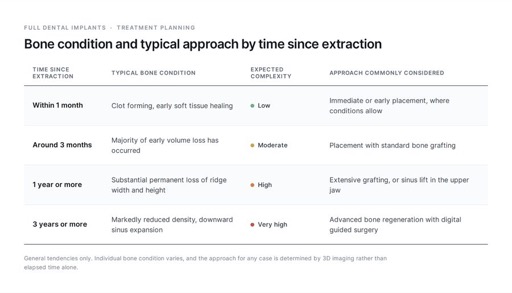
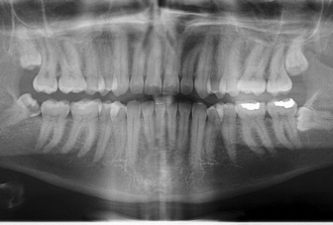
The table describes general tendencies rather than fixed rules. Individual bone condition varies widely, and the approach for any given case is determined by 3D imaging rather than by elapsed time alone. This is one reason two patients with the same number of missing teeth can be given very different treatment plans.
When implant treatment is postponed for too long, the jawbone can lose its three-dimensional shape, and more preparation is generally required before implants can be placed safely.
Where there is not enough bone around the implant fixture, bone grafting may become necessary. Long-term stability depends on the implant being surrounded by healthy bone on all sides, and clinicians generally look for a margin of sound bone circling the fixture. When the loss is significant, a wider area may need to be rebuilt, which adds to both treatment time and cost.
The upper molar area brings a separate consideration. After tooth loss, the maxillary sinus can expand downward, leaving less bone available for placement. In these cases, a sinus lift may be required before or during implant surgery.
In the lower jaw, severe bone loss can bring the implant site closer to the nerve canal. Planning here needs to be more precise, and digital imaging and guided placement are often used to reduce the risk of nerve-related complications.
When several teeth have been missing for an extended period, the internal support for the lips and cheeks can weaken. The soft tissue around the mouth may begin to look sunken or drawn inward, and the lower third of the face can appear shorter than it once did.
This is part of why full mouth implant treatment is not only about restoring chewing function. Planned well, it can also help rebuild structural support in the lower face. Patients who have worn removable dentures for several years often notice this dimension of the change most clearly, since dentures rest on the ridge without providing the stimulation that maintains bone.
Implants placed into weak or insufficient bone carry a higher chance of complications. Poor bone support makes it harder for the fixture to handle everyday chewing pressure, and forces the surrounding tissue to absorb load it was not intended to take. Over time this can contribute to loosening of the fixture or fracture of the prosthetic work above it.
It can also raise the risk of peri-implantitis, the inflammation that develops in the tissue around an implant. Where the supporting bone is already compromised, infection or inflammation tends to have a greater effect on the long-term result, because there is less healthy bone in reserve.
This is the reasoning behind what can look like an overly cautious treatment plan. Rebuilding bone before placement adds months to the timeline, but it addresses the condition that most often determines whether an implant remains stable years later.
For many patients, the most stable window for implant planning falls within the first three months after extraction. The original bone structure is often better preserved during this period, which can make placement more predictable and may allow treatment without a separate grafting stage.
Where an extraction is already scheduled and implants are anticipated, socket preservation performed at the same appointment can limit the shrinkage that follows. This single step sometimes removes the need for a larger graft procedure later.
If more time has passed, treatment remains possible. Depending on the condition of the jawbone, it may simply require additional steps such as bone grafting, a sinus lift, or guided surgery, with a correspondingly longer timeline.
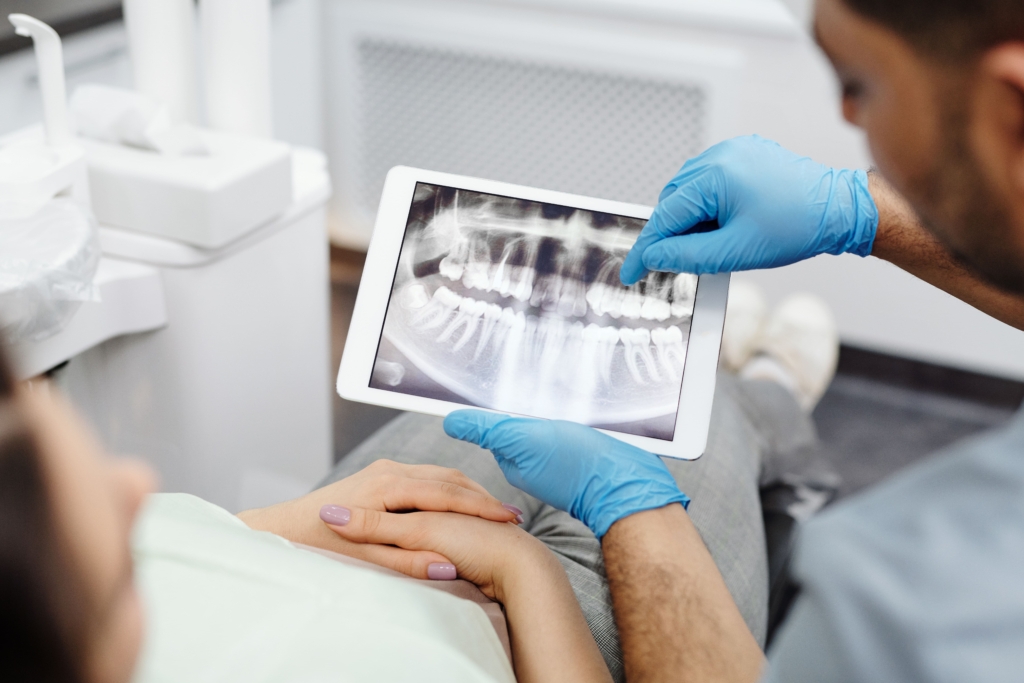
Patients who lost teeth years ago are not out of options, though the route differs.
Staged grafting followed by implants is the most common approach where loss is significant. The graft is placed first, allowed to mature for roughly three to six months, and the implant follows once the foundation is stronger.
Sinus lift with simultaneous placement may be possible in the upper jaw when some bone height remains, combining two stages into one surgical appointment.
Guided implant surgery uses digital planning and a surgical guide to position fixtures precisely within the bone that is available, which is particularly relevant near the nerve canal in the lower jaw.
Which approach applies depends on how much bone remains, its quality, and the location of the missing teeth. None of these can be determined without 3D imaging.
International patients often plan a single trip. Where bone volume is adequate and grafting is not required, that can be realistic, with placement and healing abutment work completed in one visit and the final prosthetics fitted after osseointegration.
Where grafting is needed, the realistic structure is usually two visits.
First visit. Diagnosis, imaging, any extraction, and the graft. This generally requires one to two weeks in Korea.
Second visit. Typically three to six months later, covering implant placement and the prosthetic phase.
Because the difference between these two structures rests entirely on bone condition, patients are usually better served by having existing dental records and imaging reviewed remotely before booking flights, rather than assuming either timeline in advance. A remote review can establish a provisional plan, a realistic number of visits, and an approximate length of stay before any travel is arranged.
When is the best time to get full mouth implants after an extraction? For many patients the most workable window falls within the first three months, because bone loss occurs most rapidly in the period right after a tooth is removed. Earlier planning helps preserve more natural bone and can reduce the need for additional surgery later.
What happens if the teeth were lost a long time ago? Bone grafting or a sinus lift may be needed before implants can be placed. The exact plan depends on how much bone remains and where the missing teeth are located.
Can implants be placed without bone grafting when the bone is weak? Sometimes, though it depends on the amount and quality of bone remaining. Where support is too weak, placing implants without rebuilding the bone first can increase the risk of loosening, failure, or inflammation.
Does bone quality matter as much as bone volume? Both are assessed. An implant can only integrate as securely as the bone around it allows, and density tends to decline the longer a site goes without stimulation. This is why two patients with similar ridge height can still receive different recommendations.
Is bone loss the same in the upper and lower jaw? No. The upper jaw generally resorbs more noticeably than the lower, front tooth sites more than molar sites, and upper molar areas carry the additional factor of downward sinus expansion.
Is implant treatment different when gum disease caused the tooth loss? Yes. Where periodontal disease is the cause, the gum condition and bacterial environment need to be managed carefully before any implant is placed. Without proper periodontal treatment and ongoing hygiene care, peri-implantitis can develop after surgery.
How long does the full treatment take from extraction to final teeth? Where no grafting is required, several months is typical, allowing time for the implant to integrate with the bone. Where grafting is needed first, the grafted bone generally requires three to six months to mature before placement, extending the overall timeline accordingly.
Does an immediate implant at the time of extraction avoid bone loss entirely? Immediate placement can help preserve ridge shape in suitable cases, but it is not appropriate for every patient, particularly where infection is present or initial stability cannot be achieved. Suitability is assessed case by case.
Tooth loss leads to bone loss, weaker bone quality, and gradual changes in facial structure. With full mouth implants, the most predictable results tend to follow from early diagnosis, careful imaging, and a treatment plan built around long-term stability rather than the shortest possible schedule.
For patients considering implant treatment in Korea, a remote review of existing records is the practical first step, since it allows a provisional plan and timeline to be discussed before any travel is arranged. KORA coordinates that review with its partner dental clinics, arranges the consultation, and stays with the patient through treatment and recovery.
This article was written based on an interview with Dr. Jin Hwan Kim, Director of Oneday Dental Clinic.
It provides general information only and is not a diagnosis or a treatment recommendation. Timelines, suitability, and surgical planning vary by individual and are determined by the treating dentist following clinical examination and 3D imaging.